
A few days ago, and like I often do, I stole away to a quiet place just to have an alone time with my thoughts.
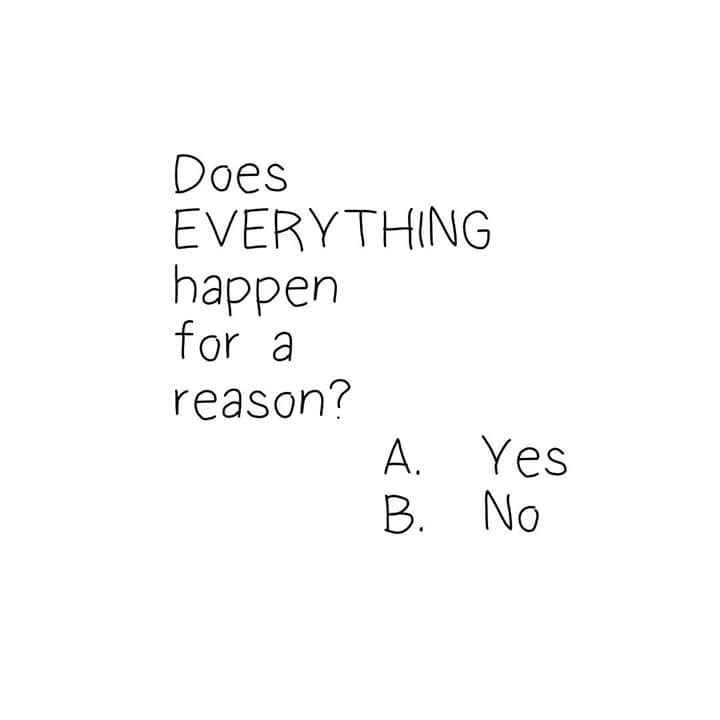
Does everything happen for a reason?
That day, as much as I tried to answer a Yes to that question, I could not. One or two—maybe a couple more of such—experiences would not let me. And as I considered the details of those events, I realised that the belief that there’s a reason for everything was a factor that got me waiting, immobilised, forcing me to accept certain things I shouldn’t have.
Now, someone may argue, “I know people whose failures and tragedies—and all other craziness life brought their way—were the platforms on which they built successful careers or ministries. Don’t you think that’s enough evidence?”
Yes. And I know that’s a valid point. But I’d like you to realise that for the few names you’d ever mention, I bet there are hundreds who had same or similar experiences but who, sadly, have no victory songs to sing—because those experiences destroyed them. I think those stories with happy endings are the way we know them only because the characters involved allowed themselves to heal, to grow, to learn empathy, and to hold up a light that burns from the debris of their hurts. My point is: It was a choice they made; it was not a natural follow-up of what they suffered.
I hope these two would stand out from this write-up: First, trying to find a reason for everything that happens could be a futile exercise. And when life introduces a new and uninteresting sub-plot to the story of our lives, it’s still up to us to decide how relevant this sub-plot will be.
 Chioma Business Blog